Snacks fail in packaging two ways: they go stale through moisture pickup, or they go rancid through fat oxidation. The flat bottom pouch handles both when specified correctly 80 to 120 micron laminate with metallised PET or aluminium barrier for fried and oil-rich products, 60 to 90 micron with metallised PET for baked and dried products. The reason flat bottom dominates the premium snack shelf is the five printable panels and the box-shaped silhouette that holds vertical at the front of an end-cap display where pillow pouches collapse and lose facing.
This guide covers what to specify when ordering custom flat bottom pouches for snack categories barrier selection by oil content, size band recommendations from single-serve through family-pack, window panel options for visual product display, and the closure decisions that hold crunch through repeated openings. Brands moving from contract co-packers into custom packaging usually start with their hero SKU in 4oz to 8oz size and expand into multi-pack and single-serve formats from there.
The barrier specification depends on the snack's oil content and how the product is processed. Fried snacks potato chips, plantain crisps, kettle-cooked chips, fried protein puffs, chicharrones, falafel chips carry surface oil that oxidises rapidly on contact with air. These need metallised PET or aluminium foil barrier at 100 to 120 micron total laminate with oxygen transmission below 1 cc per square metre per day. Without that barrier, rancidity develops in 6 to 10 weeks and you'll get customer complaints about "old oil" taste long before the printed best-before date.
Baked snacks pretzels, baked crackers, popcorn, rice cakes, baked protein puffs, vegetable crisps have lower oil content and tolerate metallised PET barrier at 80 to 100 micron. The bigger concern is moisture barrier rather than oxygen barrier. Crunch loss starts within hours when water vapour transmission rate exceeds 5 grams per square metre per day. Specify a film structure with strong moisture barrier (WVTR below 3 g/m²/day) to hold crunch through the full retail shelf life.
Dried snacks jerky, biltong, dried fruit, fruit leathers, vegetable jerky, freeze-dried snacks sit in the most barrier-demanding category. Jerky typically carries water activity (aw) of 0.75 to 0.85, which is the danger zone where mould and bacterial spoilage start. The packaging has to lock that moisture content in place too much loss and the product hardens, too much pickup and it spoils. Specify aluminium foil laminate at 100 to 120 micron with oxygen absorbers (oxygen scavenger sachets) inside the pack for 12+ month shelf life.
| Snack Category | Film Thickness | Barrier Type | Primary Concern |
|---|---|---|---|
| Fried chips & crisps | 100–120 micron | Metallised PET or aluminium | Fat oxidation |
| Baked snacks & pretzels | 80–100 micron | Metallised PET | Moisture pickup |
| Popcorn & puffed snacks | 80–100 micron | Metallised PET | Moisture & crush |
| Jerky & dried meat | 100–120 micron | Aluminium foil | Moisture & oxygen |
| Trail mix & nuts | 90–110 micron | Metallised PET or aluminium | Fat oxidation |
| Dried fruit & fruit leathers | 90–110 micron | Metallised PET | Moisture pickup |
| Granola & cereal snacks | 80–100 micron | Metallised PET | Moisture pickup |
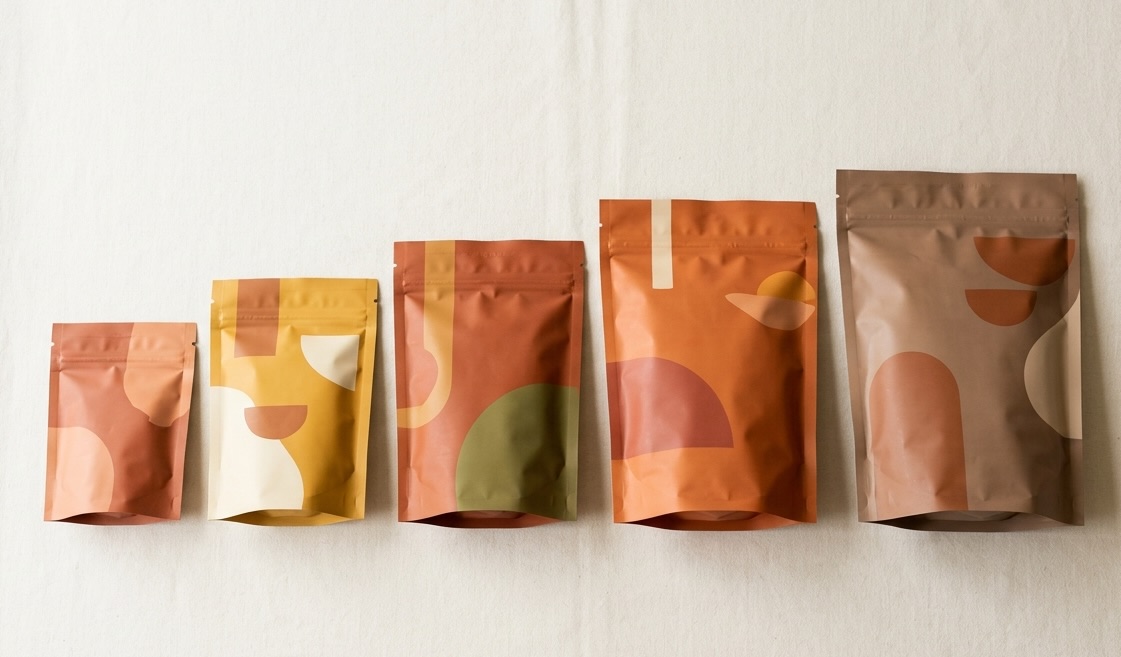
Single-serve formats from 0.75oz to 2oz (20g to 60g) are the impulse-purchase and grab-and-go segment. Flat bottom works at this size but pillow pouches and stand-up sachets are more economical for high-volume single-serve runs. Use flat bottom for single-serve only when the product is a premium positioning that needs the upright shelf presence for example, single-serve protein puffs at $3.50 retail price points where the format itself signals premium quality.
Standard retail formats from 4oz to 8oz (113g to 226g) are where flat bottom dominates. This is the size band where premium snack brands earn their shelf placement. Hippeas, Siete, Bare Snacks, Lesser Evil, Skinny Pop, and most clean-label challenger brands ship their hero SKUs in this format because the box-shaped pouch holds its silhouette through transit, retail handling, and consumer take-home. The customer recognises the format as premium before reading the label.
Family-pack and bulk formats from 10oz to 16oz (283g to 454g) are where flat bottom competes with bottom gusset. Above 8oz, bottom gusset becomes more cost-efficient because the side gusset construction uses less film at the same fill volume. Brands with strong premium positioning still pay the flat bottom premium for family-pack the unbroken visual brand language across SKU sizes is worth the cost difference. For value-tier and private-label family packs, bottom gusset typically wins on margin.

Featured Product
Premium block-bottom construction with five printable panels. Available in compostable, recyclable, and high-barrier laminates. Low MOQ from 1,000 units.
View Product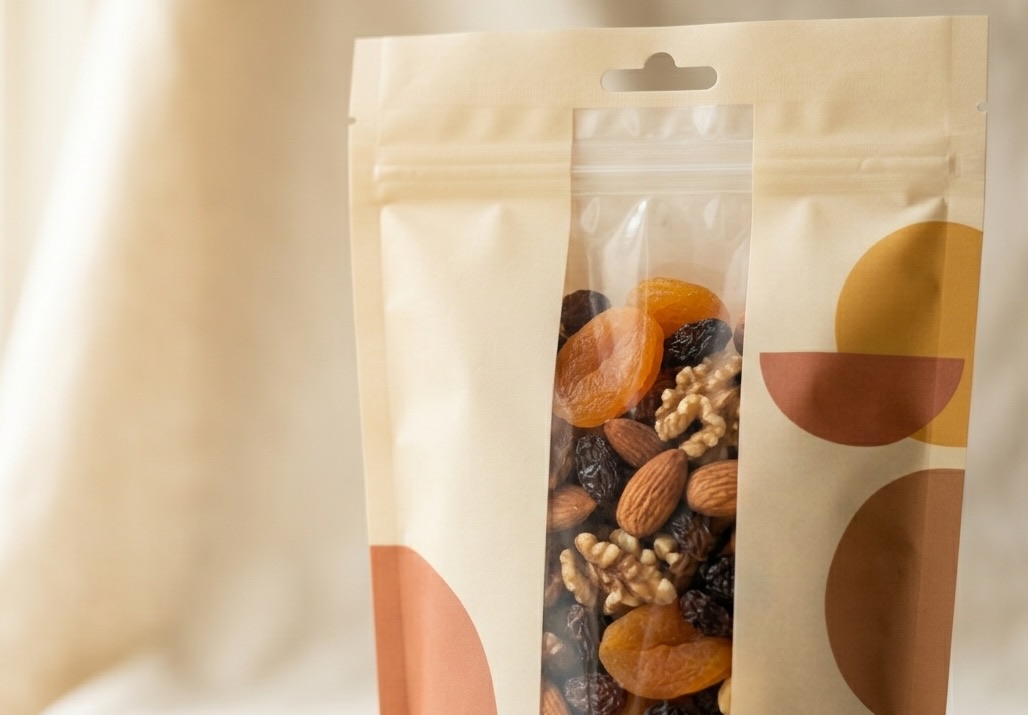
Window panels are the strongest format-specific upgrade for snack flat bottom pouches. Trail mix, granola, dried fruit, mixed nuts, jerky, and any snack where the product visual itself drives purchase benefits from a clear window usually a vertical strip on the front panel showing the product. The visual signal of identifiable nuts, seeds, dried fruit pieces, or jerky strips drives premium purchase decisions because consumers want to verify the ingredient claims on the label.
The trade-off is barrier integrity. Standard PET window panels provide moderate barrier but can't match aluminium foil for oxygen sensitivity. For trail mix and nut products with high oil content, specify a high-barrier window film (metallised PET or PVdC-coated PET) rather than basic clear PET. For brands committed to sustainable packaging, biopolymer windows in PLA-based film let you keep visual product display without breaking the compostable certification on the rest of the structure traditional PET windows contaminate the compost stream and invalidate OK Compost certification across the whole pack.
Snack flat bottom pouches need resealable closures more than coffee or pet food formats because the product is consumed in multiple sessions and crunch is the dominant quality metric. A snack bag opened on Monday and closed without resealing will lose measurable crunch by Wednesday. Press-lock zippers are the standard choice reliable across hundreds of open-close cycles, low cost, compatible with all material structures including mono-material PE recyclable structures. Slider zippers cost more but deliver a more premium handling experience for higher-priced snack SKUs above $6 retail.
Tear notches at the top of the bag matter more for snacks than most categories. Snack consumers open bags one-handed driving, walking, watching TV and a difficult tear creates a frustration moment that's measurably linked to brand abandonment in consumer research. Specify tear notches on both sides of the top seal for ambidextrous opening, and pair with a press-lock zipper that resists separation when the bag is squeezed during transit in a backpack or lunch box.
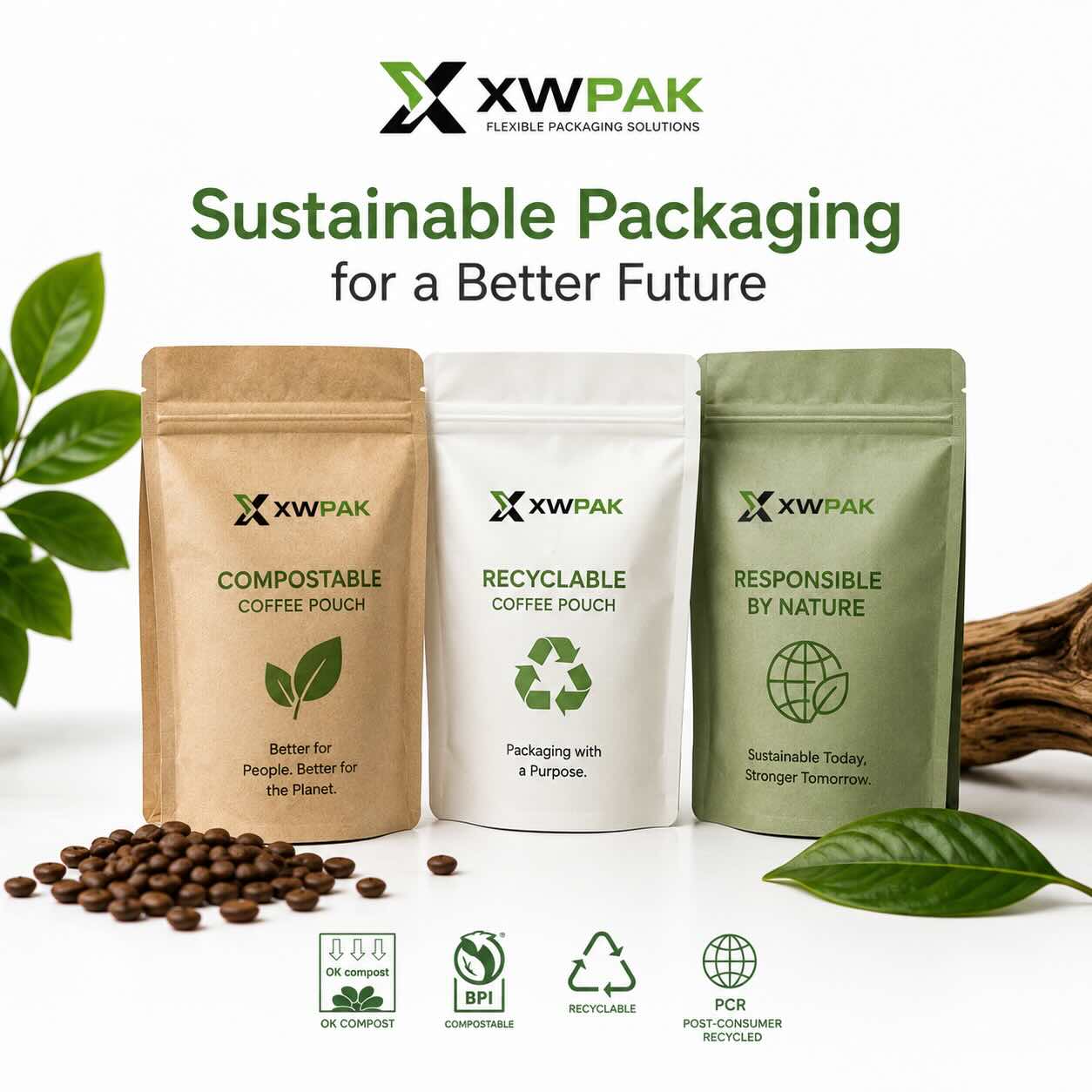
Snack packaging is the most consumer-scrutinised segment of food packaging for sustainability. Better-for-you and clean-label snack brands face direct pressure from their target buyer to deliver sustainable packaging, and inconsistency between the brand's clean ingredient claim and a non-recyclable bag is a credibility breaker. The honest sustainability options for snack flat bottom pouches are: TÜV OK Compost certified Kraft/PLA/NatureFlex structures for shelf-lives under 6 months (workable for most fresh-bake and short-cycle snacks), mono-material PE recyclable structures for retail snack brands needing 9 to 12 month shelf-life, and PCR film with 30 to 50 percent post-consumer recycled content for brands wanting reduced virgin plastic without changing barrier performance.
Custom flat bottom pouches manufactured at XWPAK ship from a BRC-certified facility with FDA and EU Regulation 10/2011 food-contact compliance, with low minimum order quantities starting at 1,000 units for digital print and same-day production start on artwork approval. For brands building a snack packaging programme across multiple SKUs and sustainability tiers, see our wider guide on custom snack and food packaging across formats and materials.
Fried chips and oil-rich snacks need 100 to 120 micron laminate with metallised PET or aluminium barrier. Baked snacks and pretzels work at 80 to 100 micron with metallised PET. The thicker barrier is needed for fried products to prevent fat oxidation over the typical 9 to 12 month retail shelf life.
Flat bottom pouches deliver a box-shaped silhouette with five printable panels that hold vertical at the front of retail end-cap displays. Pillow pouches collapse and lose facing under shelf load. The visual difference is what allows premium snack brands to command higher retail prices in the same shelf set as commodity brands.
Window panels work for snacks where the product visual drives purchase: trail mix, granola, mixed nuts, jerky, dried fruit, fruit leathers. Use a high-barrier window film (metallised PET or PVdC-coated PET) for oil-rich products, or biopolymer PLA windows for compostable structures. Avoid windows on fried chips where consistent barrier across the full pack is more important.
Standard barrier flat bottom pouches deliver 9 to 12 month shelf life for most snack categories. Aluminium foil laminate with oxygen absorbers extends jerky and high-fat snacks to 18 months. Compostable structures hold barrier for 4 to 6 months and are best matched to fresh-bake and short-cycle snack brands rather than long-shelf retail SKUs.
Choose flat bottom for retail snack SKUs from 4oz to 8oz where shelf presence and brand differentiation are critical, and for premium positioning across all sizes. Choose bottom gusset for family-pack and bulk formats above 8oz where cost per unit becomes the priority and shelf presence is less critical for the larger format.
Specifying flat bottom pouches for your snack brand?
Send us your product type, oil content, target shelf life, and SKU sizes. We'll specify the right film structure, barrier layer, and closure system for your category.
Get A Quote