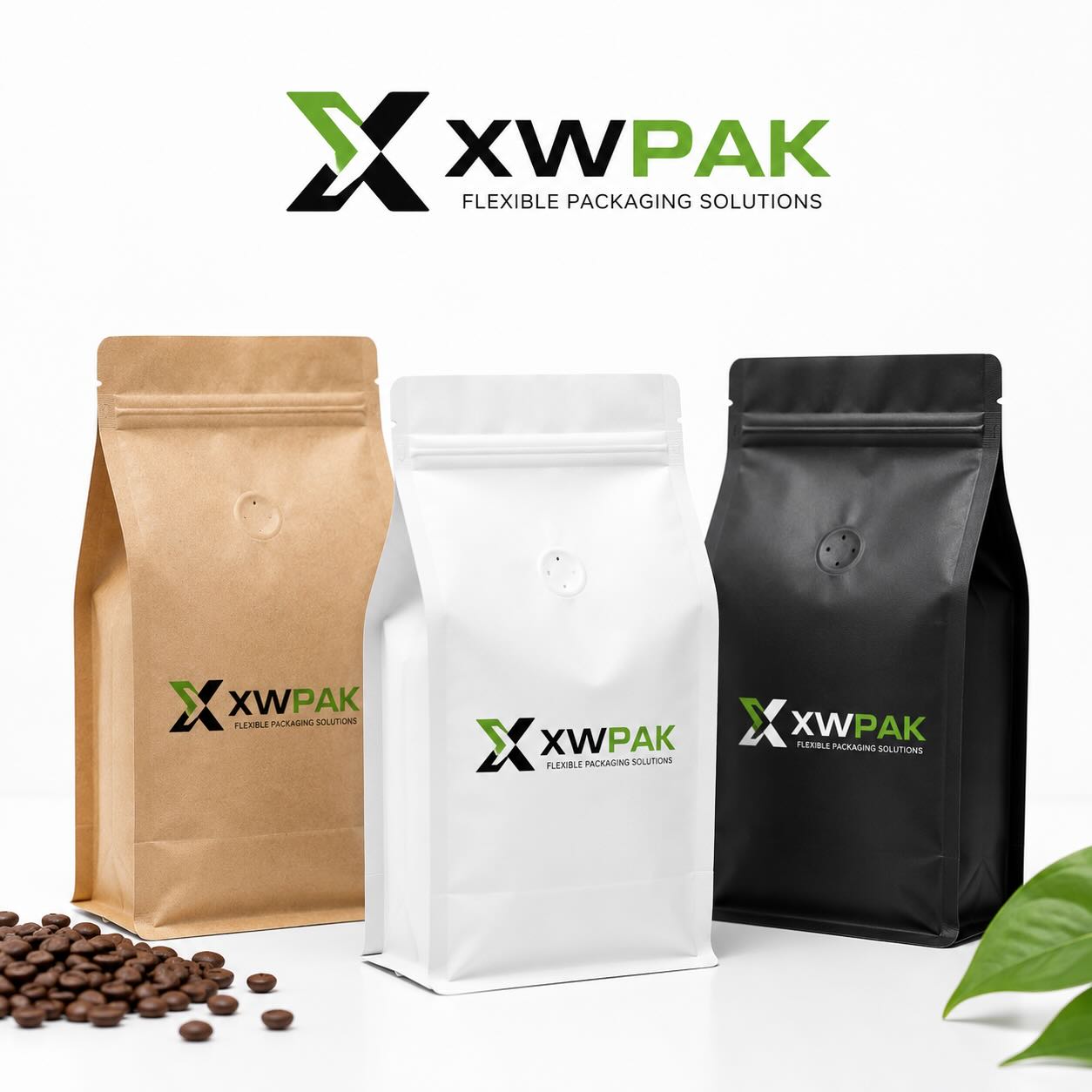
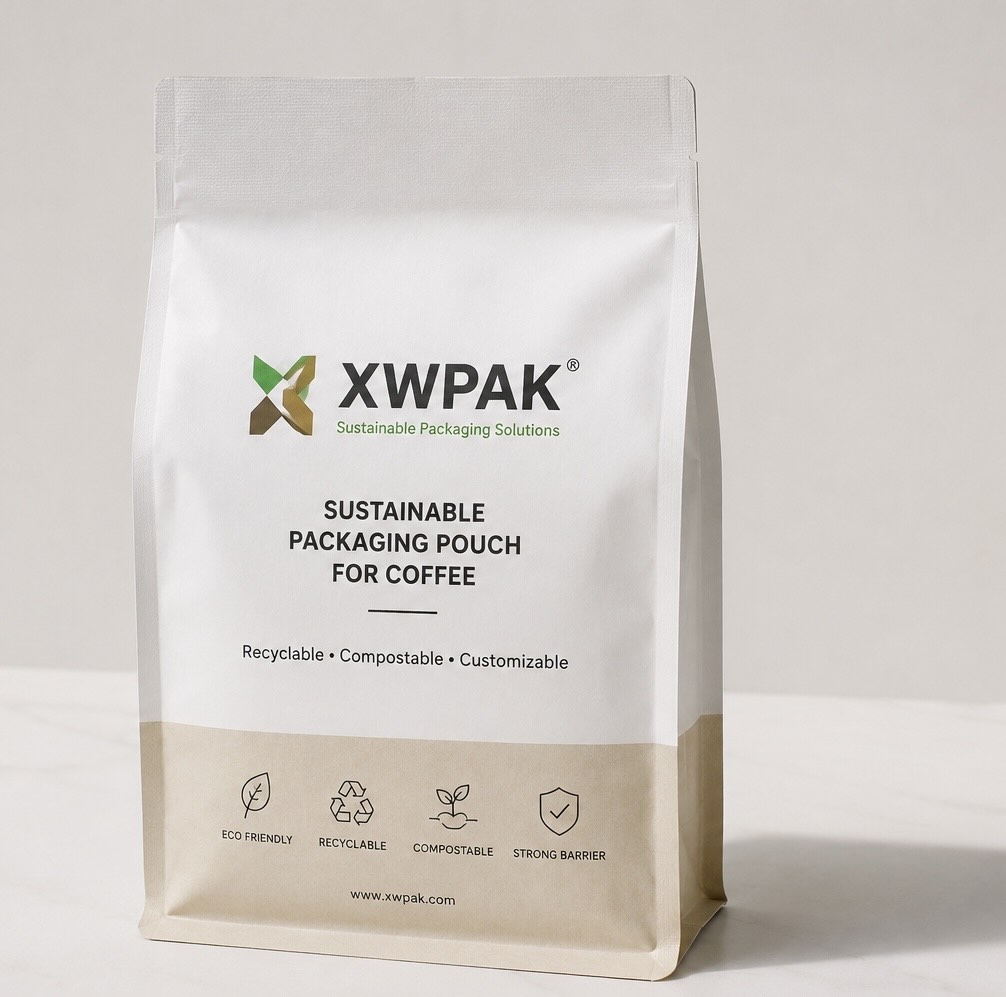
Five closure options exist for flat bottom pouches at XWPAK. No closure (heat-seal only). Tear notch with no zipper. Press-lock zipper. Tin-tie. Slider zipper. Each one solves a different problem, costs a different amount, and fits a different shopper behaviour. Picking the right one is mostly about how often the bag gets opened and how the customer wants the bag to feel in their hand. The wrong call adds cost, looks cheap, or quietly loses you repeat buyers when the product goes stale before they finish it.
This guide walks through all five options on XWPAK custom flat bottom pouches, with a real customer scenario from a US coffee roaster who came to us with a packaging problem most small roasters share. We will cover what each closure does mechanically, where each one fits, and the closure combinations that work harder than any single option on its own.
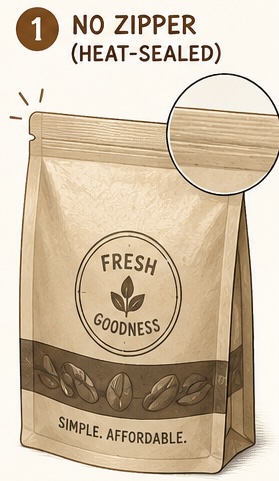
No Zipper
The bag is heat-sealed shut at the top during fill. Customer cuts or tears it open. Once open, no reseal. Cheapest option. Works for single-use products, sample sizes, and items the customer transfers into another container after opening (think pet treats moved into a kitchen jar, or coffee samples decanted into a brew bag).
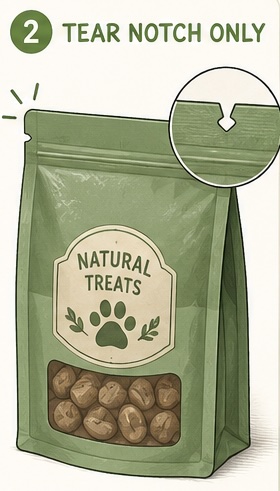
Tear Notch Only
Same as above, but with a small V-shaped notch cut into the top seal so the customer can tear the bag open cleanly without scissors. Adds almost nothing to cost. Solves the "where do I cut" problem. Still no reseal capability. Good for single-serve and impulse formats up to 100g where the product gets finished in one or two sittings.
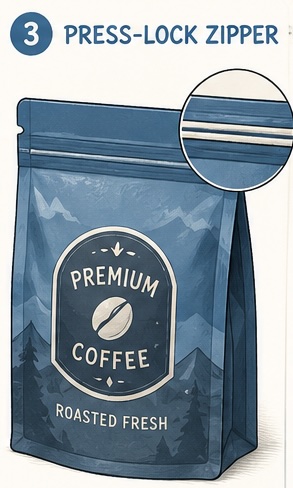
Press-Lock Zipper
The plastic interlocking strip running across the inside top of the bag, the kind you press together with your fingers. Reliable across hundreds of open-close cycles. The workhorse of the snack and coffee world. Mid-range cost. Pairs almost always with a tear notch above the zipper line, so the customer tears open the seal then accesses the zipper underneath. This is the most-used closure on premium coffee, snack, and pet food bags for good reason.
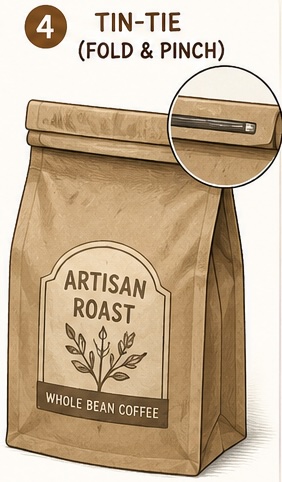
Tin-Tie
A flat metal wire wrapped in paper or film, sealed across the top of the bag. Customer folds the top down and pinches the wire to hold the fold. Old-school coffee bag closure, traditional in artisan roasting and bakery. Costs slightly more than press-lock. The folded-top look is part of the brand language for specialty coffee, particularly for whole-bean single-origin where the customer expects a craft feel. Less convenient than a zipper but stronger visual signal.
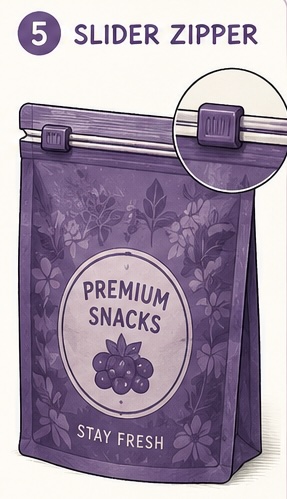
Slider Zipper
A small plastic slider sits on top of the press-lock zipper rail. Customer pulls the slider sideways instead of pinching the rails together. Easier to operate one-handed. Higher perceived quality. Most expensive of the five. Used by premium snack brands, supplement bags, and any product where the closure itself sends a quality signal at the shelf. Costs more, sells more in the right price tier.
A small specialty roaster in the United States reached out to us through the website last year. They were running 12oz whole-bean single-origin coffees in flat bottom bags with a tear notch only, no zipper. Customers were complaining. Coffee at that weight is not a one-sitting purchase. A 12oz bag lasts a household roughly two to three weeks at one or two cups a day. After tearing the bag open, the customer had no way to reseal it, so they were either decanting beans into a separate jar or rolling the bag down and clipping it shut. Both options exposed the beans to air and stripped freshness inside the first week.
The roaster knew the product was suffering. They asked us what to change. The answer was a tear notch with a press-lock zipper underneath. Tear notch on top so the seal opens cleanly the first time and the customer knows the bag has not been tampered with. Press-lock zipper a few millimeters below so the bag reseals across the two- to three-week consumption window. Total added cost was small relative to the bag itself, well within their existing margin per unit.
We also flagged a second problem they had not asked about. Their bags had no degassing valve. Roasted coffee releases CO2 for up to 14 days post-roast. Without a valve, gas pressure builds up inside a sealed bag and the bag inflates, sometimes to the point of bursting on shelves. Adding a one-way degassing valve solves this without letting outside air back in. They added the valve in the same revision as the zipper. Six months later they reordered with the same spec. Customer complaints on freshness dropped to almost nothing.
The deciding factor is how many sittings the customer needs to finish the product. Single-sitting products (sample packs, single-serve treats, trial sizes under 100g) work fine with no zipper or just a tear notch. Multi-sitting products opened daily or every few days (coffee, granola, pet treats, supplements, dried fruit) need a zipper. Multi-sitting premium products where the closure has to feel premium in hand (high-end protein, supplement powders, specialty teas, premium snack brands) earn the slider upgrade.
Product weight matters too. A 50g bag of treats will probably get finished in one or two openings even if it technically reseals. Putting a slider zipper on it is overspending. Conversely a 1kg coffee bag without a zipper is almost guaranteed to generate complaints inside the first week of use. The bigger the bag, the longer the consumption window, the more the closure earns its cost.
Brand positioning carries weight on top of mechanical fit. Tin-tie sends a different signal than slider zipper even when both reseal effectively. Specialty coffee buyers expect tin-tie or press-lock with tear notch. Premium snack buyers expect slider or press-lock. Supplement buyers expect slider for powder formats. Match the closure to the customer's mental category for the product, not just to the engineering need.
 | ★ Featured Product Flat Bottom PouchPremium block-bottom construction with five printable panels. Five closure options. FDA & EU 10/2011 compliant. BRCGS certified production. Low MOQ from 1,000 units. View Product → |
Closures pair up in ways most brands underuse. Tear notch with press-lock zipper, the combination from the coffee roaster scenario above, is the strongest entry-level pairing for coffee, snacks, and pet food up to 1kg. The tear notch gives a clean first opening and tamper-evident signal. The zipper handles the multi-week consumption cycle.
For coffee specifically, tear notch plus press-lock plus a one-way degassing valve covers all three problems coffee bags have to solve at once: clean first opening, multi-use reseal, and CO2 release. Without the valve, freshly roasted beans pressurise the bag in transit. Without the zipper, the bag stops resealing after day one. Without the tear notch, the customer hacks the bag open and the seal looks ragged on shelf return. All three together costs cents more than any one alone.
Tin-tie plus a degassing valve works for whole-bean specialty coffee where the brand wants the artisan look. Tin-tie folds the bag closed in the traditional roaster format, the valve handles the gas. No zipper needed because the customer is already used to folding the bag back down between brews in this product category. Skipping the zipper saves a small amount per unit and reinforces the craft positioning.
Slider zipper plus a window panel works for premium snacks and supplements where the closure and the visual product display are both part of the shelf pitch. Slider for the in-hand quality cue, window so the customer can see the product before buying. Compostable flat bottom pouches with this combination need biopolymer-compatible windows and compostable closures, otherwise the OK Compost certification fails on the closure components alone.
Custom flat bottom pouches at XWPAK run between $0.10 and $1.00 per unit depending on size, film structure, print method, closure choice, and order volume. The closure itself is one of several inputs into that range, not the dominant one. Film thickness and barrier type drive more cost than the zipper. So does print method (digital costs more per unit at low volumes, rotogravure costs less per unit at high volumes but requires plate setup). And so does MOQ tier.
A practical hierarchy. No closure is the cheapest. Tear notch adds almost nothing. Press-lock adds a small amount, usually well worth it for any bag opened more than three times. Tin-tie adds slightly more than press-lock. Slider is the most expensive of the closures but typically still under 10 percent of total bag cost on a finished pouch. Sustainability also affects cost. Compostable closures cost more than conventional plastic closures because the supply chain is smaller and the material is more specialised.
When you brief a custom flat bottom pouch order, closure spec needs four pieces of information. Closure type (tear notch, press-lock, tin-tie, slider, or none). Whether you want closures combined (tear plus press-lock is the common combo). Closure material if sustainability matters (mono-material PE for recyclable pouches, compostable polymer for OK Compost certified structures). And closure color or finish if it should match the brand palette (some closures can be tinted or printed to match).
For coffee, also specify whether you want a degassing valve and what size (small for retail bags, larger for wholesale or 1kg+ formats). For pet food, specify if reinforced top seal is needed for heavier weights. The closure conversation usually drives the rest of the bag spec. Good packaging suppliers will ask these questions back if you do not raise them. Coffee packaging specifically has more closure-related decisions than most categories because of the gas release problem.
Five closure options. No zipper (heat-seal only), tear notch only, press-lock zipper, tin-tie, and slider zipper. Closures can be combined. The most common premium combination is tear notch with press-lock zipper, used widely on coffee, snack, and pet food bags up to 1kg.
Slider zippers cost more but feel premium in hand and operate one-handed. Use them for high-priced products where the closure is part of the brand positioning. Premium snacks above $6 retail, supplement powders, specialty tea, and high-end protein bags. For everyday snack and coffee formats, press-lock works just as reliably at lower cost.
Yes. The tear notch sits above the zipper. It opens the heat-seal first, providing a clean first opening and a tamper-evident signal that the bag has not been opened before. The zipper then handles the multi-use reseal. Specifying both upfront is the standard premium spec for coffee, snacks, and pet food.
Tear notch plus press-lock zipper plus one-way degassing valve. The valve releases CO2 from freshly roasted beans without letting air in. The tear notch handles clean first opening. The zipper handles the two-to-three-week customer consumption window. Tin-tie can replace the zipper if the brand wants a traditional artisan format.
Custom flat bottom pouches range from $0.10 to $1.00 per unit depending on size, film, print method, closure, and volume. Closure cost varies. Tear notch adds almost nothing. Press-lock adds a small amount. Tin-tie slightly more than press-lock. Slider is the most expensive but typically still under 10 percent of total bag cost on the finished pouch.
Specifying closures for your custom flat bottom pouch?
Tell us your product weight, opening cycle, and brand positioning. We will recommend the closure spec that matches your customer's actual use pattern, including any combinations that work harder than a single closure on its own.
Get A Quote