8oz is a sampler and gift size, commands 40-60% price premiums, ideal for subscription boxes and brand discovery
1lb dominates retail and cafe channels, offers best unit margin, fastest inventory turnover
5lb targets wholesale, restaurants, and offices, requires higher production minimums but lowest per-pound cost
Choose size by sales channel, not by what competitors do. Each size serves a distinct buyer behavior
Most roasters succeed with 1lb as primary SKU, then layer 8oz for sampling and 5lb for wholesale
Your roast quality is table stakes. Your size choice is profit strategy. A customer willing to spend $18 on a single-origin pour-over buys 1lb bags. A customer sampling your brand buys 8oz. A cafe buying for office service buys 5lb. The size determines who your buyer is before they ever taste the coffee.
This isn't theoretical. Retail data consistently shows that 1lb bags account for 60-70% of specialty coffee sales by volume in North America. 8oz runs 15-20%. 5lb runs 10-15%. But margins invert: 5lb often generates more revenue per unit sold because the per-pound cost is 30-40% lower than 1lb.
Size also signals positioning. A 5lb bag signals value and bulk efficiency. A 1lb bag signals premium and quality. An 8oz bag signals tasting and exploration. Customers decode this without thinking about it.
8oz bags hold roughly 22-24 cups of brewed coffee (assuming 0.35oz per cup). For a customer trying your roaster for the first time, that's the perfect amount: enough to form an opinion, not so much that it's a financial risk if they don't like it.
Retail shelf price for 8oz specialty coffee ranges from $8-16, depending on origin and roast profile. Online, subscription roasters charge $12-18 for sampler packs. The per-pound wholesale value is roughly 40-60% higher than 1lb bags because you're selling novelty and discovery, not volume.
Use cases: first-time buyer packs, gift sets, subscription tasting samples, farmers market sampling, coffee shop retail. The common thread is low purchase friction. A $14 8oz bag is an impulse; a $25 1lb bag is a commitment.
Production note: 8oz bags have no cost advantage at the manufacturing level. Your setup and die costs are identical to 1lb. Per-unit production cost for 8oz may be 10-15% higher than 1lb because you're running the same production line for fewer units per run. This is why the price premium exists, not greed.
1lb is 454 grams. It brews roughly 50-60 cups depending on grind and brew method. For a daily coffee drinker, that's 1-2 weeks of supply. For a cafe or office, it's 3-5 days. It's the Goldilocks size: substantial enough to feel like an investment, not so large that customers worry about staling.
Retail price: $14-22 per 1lb bag for specialty coffee in North America. Direct-to-consumer subscription roasters often charge $14-18. Wholesale to cafes and retailers runs $8-12 per unit. The 1lb format has the fastest inventory turnover of any size because it's the default purchase unit in the specialty coffee market.
1lb is also where packaging design gets the most visibility. A 1lb bag sits on a shelf or table longer than an 8oz sampler and gets handled more carefully than a 5lb bulk bag. Retailers and customers scrutinize the design, origin story, and flavor notes on a 1lb bag. This is why most roasters invest heavily in 1lb bag branding.
The coffee industry defaults to 1lb because it's the natural equilibrium between production efficiency, shelf presence, and customer expectation. If you're starting a roaster and can only run one size initially, choose 1lb.
Key Insight: 1lb bags have the best unit margin, fastest turnover, and highest retail visibility. Most roasters make 60-70% of their sales volume from 1lb. This should be your primary SKU.
5lb is 2,270 grams. It brews 250-300 cups. This is destination territory: restaurants, offices, high-volume cafes, subscription bulk orders. A single 5lb bag supplies a small cafe for 1-2 days or an office break room for a week.
Wholesale pricing for 5lb: $35-55 per unit depending on origin. That's $7-11 per pound, a 30-40% discount from 1lb wholesale. To the buyer (cafe owner, office manager), that discount is the whole point. They're not buying premium. They're buying efficiency and cost containment.
5lb also opens a revenue stream that 1lb alone can't: bulk direct-to-consumer for serious enthusiasts. Coffee aficionados who brew daily and want to buy in quantity. Home roasters who buy green beans and want to test finished coffee in volume before committing. These buyers exist and they spend more total dollars with fewer transactions.
The trade-off: production minimums for 5lb bags are typically higher (3,000+ units if custom printing). Lead time may stretch 14-21 days. You need to forecast demand confidently because 5lb commitment is real inventory.
A spout pouch works for 5lb liquid or slurry products but is rare for whole-bean coffee. Stick with gusset or flat bottom for 5lb bean bags.
Real Example: A roaster with $2 COGS per 1lb bag retails at $16, grossing $14 per unit. At 5lb ($30 retail, wholesale $8), the gross is $6 per unit but volume covers it. What matters is total revenue, not per-unit margin. A cafe buying one 5lb bag weekly = consistent revenue you can forecast.
Mature roasters don't pick one size. They run all three, but in order of priority:
Phase 1: Start with 1lb
Launch a roaster with 1lb bags only. This is your core revenue. Build inventory, brand, and customer base here. Don't branch to 8oz or 5lb until 1lb sales are consistent and predictable.
Phase 2: Add 8oz (Month 3-6)
Once 1lb is stable, introduce 8oz for: gift sets, samplers, subscription variety packs, and farmers market impulse buys. 8oz typically adds 10-15% to total revenue without cannibalizing 1lb sales. It's an upsell into the customer funnel, not a replacement.
Phase 3: Add 5lb (Month 6-12)
Once you're roasting 2,000+ lbs/month, add 5lb for wholesale, bulk DTC, and institutional buyers. This adds 15-25% to revenue and stabilizes cash flow because wholesale orders are usually on payment terms (net 30) rather than upfront DTC payments.
By month 12, a healthy roaster runs all three sizes. 1lb generates 60-65% of unit sales but 45-50% of revenue. 5lb generates 12-15% of unit sales but 35-40% of revenue. 8oz fills the rest. Diversification protects against channel swings: if wholesale softens, DTC and retail keep you steady.
| Sales Channel | Primary Size | Secondary Size | Rationale |
|---|---|---|---|
| Direct subscription | 1lb | 8oz (variety) | 1lb is standard, 8oz lets customers sample new roasts risk-free |
| Retail (grocery, specialty shop) | 1lb | 8oz (gift display) | 1lb is the shelf standard, 8oz captures gift buyers |
| Cafe / restaurant | 5lb | 1lb (featured single-origin) | 5lb for service, 1lb for retail sale on counter |
| Office / institutional | 5lb | None | 5lb is the break-room standard, price-sensitive |
| Gift / corporate sets | 8oz | 1lb (premium tier) | 8oz is gift-friendly, 1lb justifies premium pricing |
| Farmers market | 1lb | 8oz (impulse) | 1lb core, 8oz catches browsing without commitment |
Packaging manufacturers treat size as a secondary variable to custom printing. A 1lb bag and an 8oz bag use the same production line and same dies. The difference is fill weight, not setup complexity. Lead time is identical: 10-14 days for custom printed bags.
Minimum order quantities vary by manufacturer. XWPAK accepts 1,000 units across all sizes. Other manufacturers enforce 3,000-5,000 unit minimums. A single SKU (e.g., 1lb house blend with custom design) = one MOQ minimum. If you order 1,000 units of 1lb AND 1,000 units of 8oz, that's 2,000 total units across two SKUs, and some manufacturers charge MOQ per SKU, not total.
Budget accordingly: small roasters often order 1,000 1lb bags per month, then layer 500 8oz bags for variety. The 1,500 total units may trigger two MOQ fees, or one, depending on your partner. Clarify this with your packaging supplier upfront.
None, if the packaging is identical. An 8oz bag with a one-way valve and zipper closure preserves coffee as well as a 1lb or 5lb bag with the same specs. Oxygen barrier and seal integrity matter, not volume. A poorly sealed 1lb bag goes stale faster than a well-sealed 8oz bag.
Yes, in principle. In practice, a design that looks balanced on a 1lb bag may look cramped on 8oz or stretched on 5lb. Most roasters scale the design proportionally or simplify it for smaller sizes. Talk to your designer. A 1lb template doesn't automatically work for 8oz without tweaking.
Not standard in specialty coffee. 12oz and 16oz exist but they're niche. Buyers expect 8oz, 1lb (16oz), or 5lb. Non-standard sizes confuse retail placement and add complexity to your packaging line. Stick with the three standards unless you have a specific wholesale contract demanding otherwise.
No. 2.5lb is a hedge that doesn't work. It's too expensive for office/institutional buyers (they want 5lb). It's too much for DTC (they want 1lb). It's dead inventory. If a customer asks for it, do one custom batch, don't add it as a permanent SKU.
1lb on retail shelves = gusset (visibility and stacking durability). 8oz and 5lb can be either. Gussets cost 10-15% more per unit. Flat bottoms are cheaper and work for DTC. If your 8oz and 5lb are wholesale-only, flat bottom saves money. If they hit retail, use gusset for all three to keep the brand consistent on shelf.
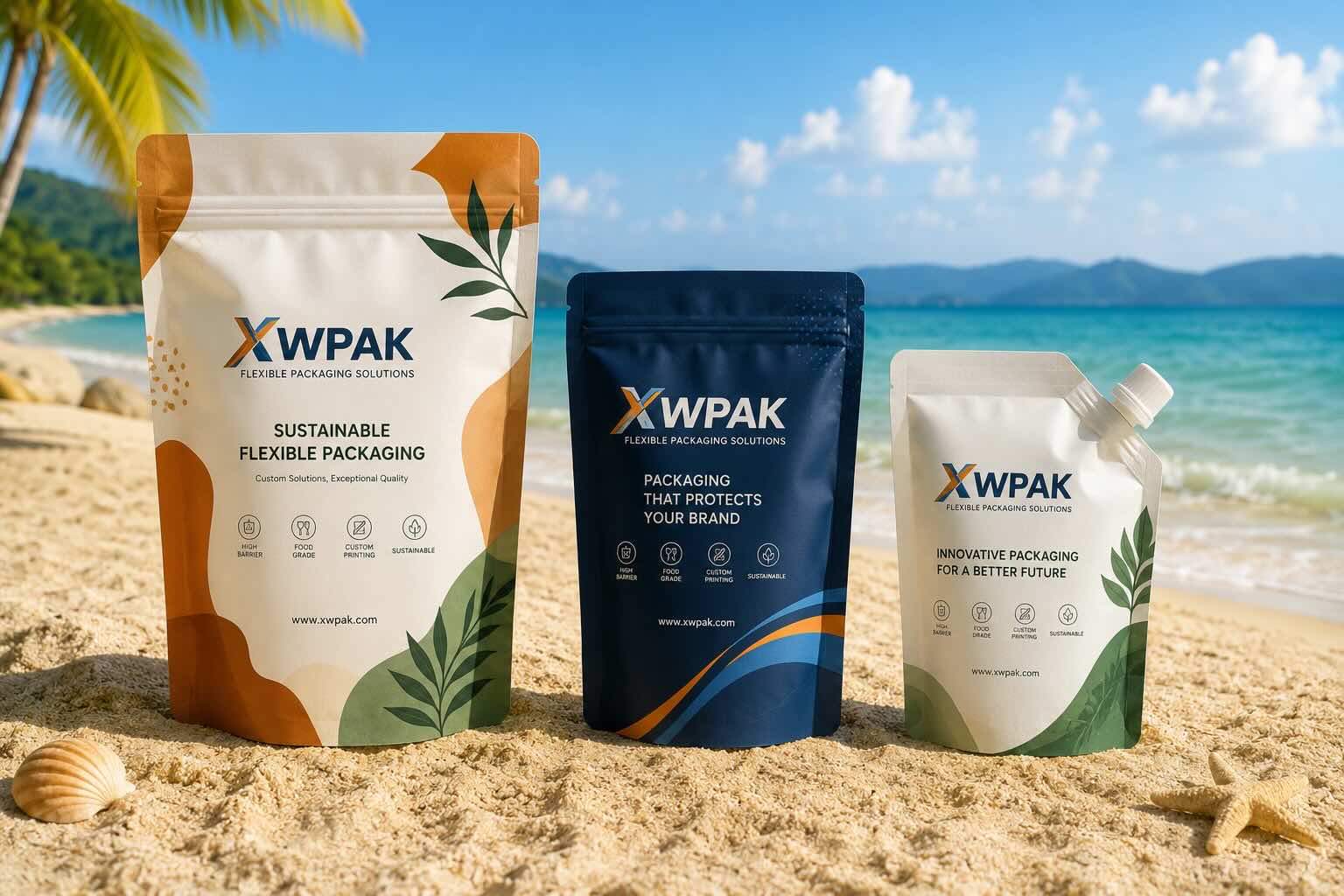
XWPAK manufactures 8oz, 1lb, and 5lb coffee bags with custom printing, valves, and closures. Start with 1lb. Add sizes as your roaster grows.
Get a Quote